
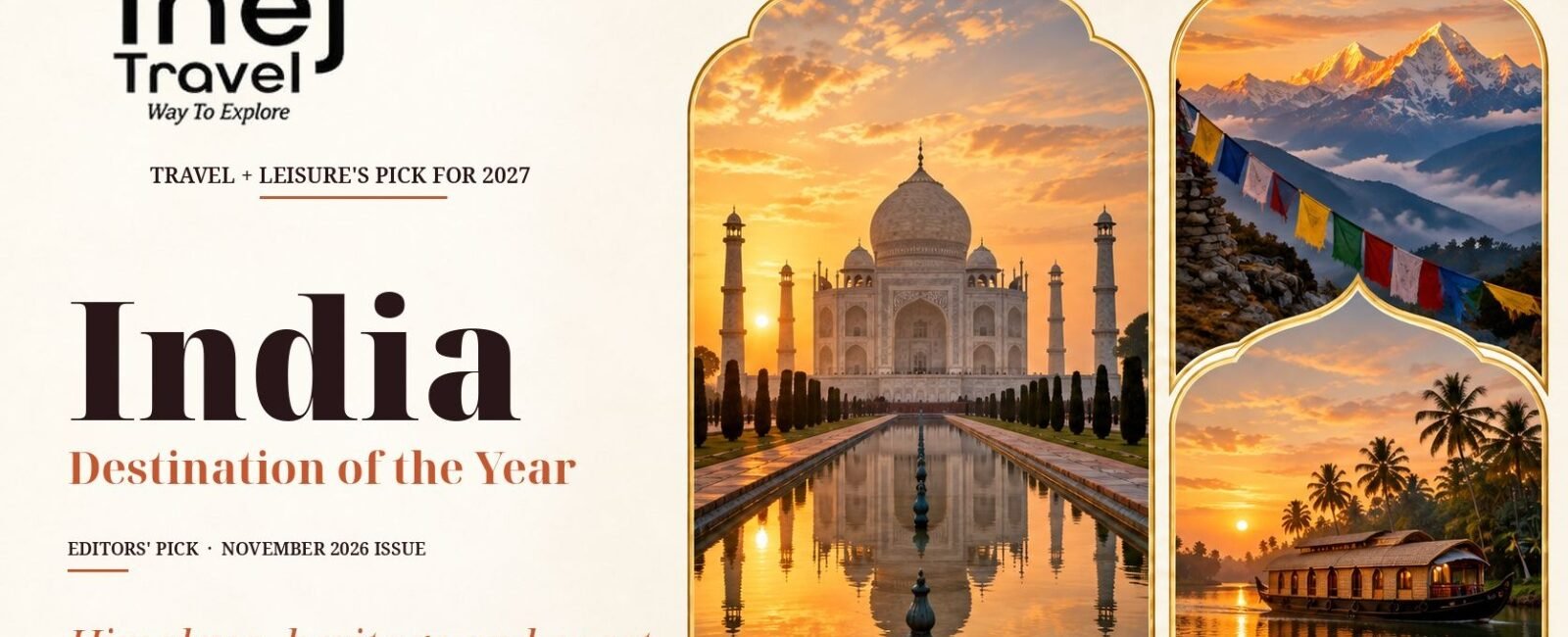
India Named Travel + Leisure Destination of the Year 2027: What It Means and How to Plan Your Trip
In November 2026, the US magazine Travel + Leisure picked India as its Destination of the Year for 2027. Indian news sites, including the Free Press Journal, reported it as India being crowned the world’s best travel destination for 2027. The headline travelled fast, but the detail matters: this is the magazine’s editorial pick for the year ahead, not a government or international ranking.
This guide explains what the recognition actually is, why the editors chose India, which places the coverage highlights, and how you can turn the buzz into a well-planned trip. It also covers what a recognition like this does and does not change for travellers, including the honest caution that some Indian voices have raised.
TL;DR / Quick Answer
Travel + Leisure named India its Destination of the Year for 2027, announced in its November 2026 issue. It is an editorial recommendation from a travel magazine, the twelfth edition of its yearly pick. The magazine points to India’s variety, from wildlife to heritage cities to islands, and to its growing hospitality scene. For travellers, the practical message is to plan early, mix regions rather than chase one landmark, and check permits and seasons before booking.
What Exactly Was Announced?
Every November, Travel + Leisure names one country as its Destination of the Year for the following year. Time Out reports that 2027 is the twelfth edition and that India is the pick. The Traveler notes that earlier picks were Costa Rica for 2024, Thailand for 2025 and Brazil for 2026, and describes the selection as a curated editorial recommendation, “not a government ranking or international award”.
That distinction is useful. Headlines such as “World’s Best Travel Destination” are catchy, but the more accurate wording is “Travel + Leisure’s Destination of the Year 2027”. If you quote the recognition in your own planning, a trip brochure or a social post, name the magazine so the claim stays accurate.
The magazine’s editor-in-chief, Jacqui Gifford, wrote about her own connection to India. She first visited at the age of three and was spellbound by the colours, the food and the warmth of conversation, adding that the country “seeps into your skin”. You can read her note on the Travel + Leisure announcement page.
Why India? What the Coverage Highlights
The reasons given across the coverage are consistent. India is described as a country where one holiday can feel like several, because the landscape, food, language and customs change from region to region.
Diversity of landscapes
The Free Press Journal report points to the range from snow-covered Himalayan mountains in the north to the tropical beaches of Goa and Kerala in the south, along with bustling cities, hill stations, wildlife sanctuaries, deserts and coastal areas.
Heritage and living culture
The same report names the Taj Mahal in Agra, the temples of Khajuraho, the forts and palaces of Rajasthan and the monuments of Hampi, along with festivals, music, dance and local customs.
Spiritual and wellness travel
Varanasi, Puri, Rameshwaram, Rishikesh, Haridwar, Bodh Gaya and Amritsar are listed as destinations for religious experiences, meditation and yoga. The report also describes India as the birthplace of yoga and Ayurveda, which draws wellness travellers.
Food, wildlife, adventure and hospitality
Regional cuisines, from Punjabi dishes and Gujarati thalis to South Indian food, Bengali sweets and coastal dishes, are a big part of the story. The report also mentions wildlife tourism, adventure activities, luxury hospitality and improving travel infrastructure. Travel + Leisure itself highlights the country’s fast-growing hospitality scene.
Places the Coverage Puts in the Spotlight
Different outlets pick different highlights from the Travel + Leisure feature. The table below sticks to places named in the sources linked at the end of this article.
| Place | What the coverage says | Source |
| Lakshadweep | Archipelago of 36 islands off India’s southwestern coast; coral reefs, snorkelling and diving. Entry is regulated and visitors need prior permission. | Times Now |
| Chettinad, Tamil Nadu | Heritage mansions, wooden details, courtyards and a pepper-rich cuisine. | Times Now |
| Madhya Pradesh | Panna National Park for tigers and safaris, plus historic temples. Khajuraho is described as an overlooked treasure near Panna. | Times Now |
| Mumbai | Heritage buildings, restaurants, art spaces and distinct micro-neighbourhoods. | Times Now |
| New Delhi | Old Delhi’s Chandni Chowk and its street-food trail, plus historic monuments. | Times Now |
| Mawsynram, Meghalaya | One of the wettest inhabited places on Earth, with sandstone cave systems. | Time Out |
| Jodhpur and Jaipur, Rajasthan | The Blue City with Mehrangarh Fort, and the Pink City, a long-time favourite of international visitors. | Times Now |
| Udaipur, Rajasthan | Called the Venice of the East in the coverage. | Time Out |
| Khajjar, Himachal Pradesh | A Himalayan hill town nicknamed India’s mini-Switzerland, with snow-capped peaks and alpine meadows. | Time Out |
Notice the mix. Alongside famous names such as Jaipur and Delhi, the feature also points to less-visited places. That supports the idea of a multi-stop journey rather than a single bucket-list trip, which is how The Traveler describes the feature.
What the Recognition Means for Travellers
A magazine pick does not change visa rules, flight prices or hotel availability by itself. What it usually changes is attention. The Traveler notes that tour operators, hotel groups and tourism boards often build campaigns around the annual pick, and that the honour does not guarantee a rise in arrivals.
Expect more interest, so plan earlier
If more international visitors start planning India trips for 2027, popular stops such as the Taj Mahal, Rajasthan’s palaces and Kerala’s backwaters may get busier. Booking guides, drivers, hotels and train or flight segments early gives you more choice. This is a sensible planning habit, not a prediction of exact crowd numbers.
The honest caution
Not every reaction was celebration. Industrialist Anand Mahindra wrote that the recognition is “not an occasion for celebration” but an opportunity, and urged governments to create hassle-free tourist circuits and simplify visas, as reported by Mint. The Hotel Association of India called the recognition a “defining opportunity” while stressing better coordination on airports, transport, safety and cleanliness, as reported by The Traveler.
The Guardian’s coverage adds a traveller’s view: expectations built around India can differ from the experience of being there, particularly for women, and it collected tips from experienced female travellers on travelling beyond the usual tropes. For a first trip, that is a reminder to choose reputable local support and keep your plans flexible.
Inside the Travel + Leisure Issue
The magazine’s own Destination of the Year package gives a feel for what its editors wanted readers to see. In her letter, Jacqui Gifford describes India as a nation of 1.5 billion people and one of the world’s fastest-growing major economies, with some of the most spectacular hospitality experiences. She says the photographers and writers captured its diversity, from a tiger safari in Panna National Park to the rituals of the Hornbill Festival, a celebration of Indigenous communities in Nagaland.
She also names the things she most wants to do: a food tour of Chandni Chowk market in Old Delhi, an exploration of Mumbai’s micro-neighbourhoods and a pilgrimage to the Taj Mahal, which she has now seen four times. The issue’s sections cover hotels, experiences, culture and cuisine and wellness, and the wellness section features Ananda in the Himalayas. You can browse the package on the Travel + Leisure page.
Goa Beyond the Beach Parties
Goa is often the first name that comes to mind for a beach holiday. Times Now, summarising the magazine’s highlights, says the feature looks at its quieter beaches and lesser-known villages and encourages travellers to look beyond the usual tourist circuit. In practice, that can mean choosing a smaller stay away from the busiest stretch, spending time in Portuguese-influenced neighbourhoods, eating local seafood and leaving mornings unplanned.
The Numbers in Context
It helps to keep the numbers honest. The Traveler reports that India received about 9.15 million foreign tourists in 2025, compared with 10.93 million in 2019, which is roughly 16 percent below the pre-pandemic peak, based on government tourism data. It also explains that total international arrivals, which include Indian nationals living abroad, have passed 2019 levels, while the narrower foreign tourist count has not yet. The same article notes the government’s aspirational target of 100 million foreign tourists by 2047.
What does this mean for you? Mainly that the recognition arrives at a time when India is still building its international visitor numbers, and that tourism bodies want the experience to be good enough that first-time visitors return.
Travelling Beyond the Tropes: Lessons from the Guardian
The Guardian spoke to experienced female travellers about India. The journeys they describe are not the classic checklist. Travel writer Shivya Nath recalls a trek through the Tirthan Valley in Himachal Pradesh with a crew of local women guides, through forests in the Great Himalayan National Park, foraging a seasonal wild fern and camping beside a river. Afsha Sethi remembers spending a week with a farming family in Karkolli, northern Karnataka, through an NGO programme when she was at school.
The practical lessons are easy to apply. Look for locally led experiences, choose operators who train and employ local guides, give yourself time in one place instead of rushing, and keep expectations flexible. The Guardian also notes that expectations built around India can differ from the experience, especially for women, so reputable local support, clear communication and sensible planning matter.
A Practical Pre-Booking Checklist
Use this checklist before you confirm any India itinerary. It does not depend on any one operator.
| Check | Question to settle | Why it matters |
| Dates and season | Which months suit each region on your route? | Weather and festivals change from region to region. |
| Entry and permits | Does any stop need a permit or prior permission? | Lakshadweep is one example named in the coverage. |
| Visa and passport | Is your passport valid for the period required, and is the right visa arranged? | Check the official government source for your nationality before booking. |
| Transport | How are you moving between stops: car with driver, train, domestic flight? | Long road legs eat into sightseeing time. |
| Stays | Are hotels, heritage stays or homestays chosen to match your pace? | A heritage stay in Rajasthan and a houseboat in Kerala are different experiences. |
| Inclusions | What is included: transfers, entry tickets, guides, meals? | Compare packages on inclusions, not on price alone. |
| Support | Who do you call if a flight or train changes? | Ask for a named contact and a written itinerary. |
| Insurance and health | Is travel insurance arranged, and have you checked any health advice for your route? | Do this before paying non-refundable amounts. |
Common Mistakes to Avoid
Trying to see too much: India rewards slower travel. Two or three regions in ten days is more enjoyable than six regions in the same time.
Treating the headline as a guarantee: a magazine pick says editors recommend the country, not that every service will be perfect. Check recent reviews and ask direct questions.
Booking late for peak periods: if the coverage drives more interest in 2027, popular routes may fill earlier. Lock in key hotels and transport first.
Skipping local voices: guides, homestays and community-run experiences often give the memories travellers talk about years later, as the Guardian’s travellers describe.
Ignoring rules: permits, dress norms at religious sites and local customs are part of travelling well. Ask your planner for a short briefing before each region.
How to Plan an India Trip Around This Recognition
- Pick regions, not just landmarks
India is too large for one short holiday. Choose two or three regions that fit your time. A first-timer might combine the Delhi, Agra and Jaipur circuit with a nature or coastal stop. A repeat visitor might go deeper into one state, such as Rajasthan or Kerala.
- Check permits and entry rules first
Some places in the coverage have conditions. Lakshadweep, for example, is described as regulated, with visitors needing prior permission. Always check the current requirement with the official authority or a licensed operator before you build a trip around it.
- Match the season to the region
Mawsynram is famous for rain, Himalayan towns have snow, and desert cities have hot summers. Ask your planner for the best months for each region you choose rather than relying on one calendar for the whole country. Check current weather and any local advisories close to departure.
- Mix famous and quieter stops
The coverage itself pairs headline sights with quieter ones. Add one lesser-known stop to a classic route, such as a tiger reserve after Khajuraho, or a heritage-mansion stay in Chettinad after a Tamil Nadu city visit.
- Get written itineraries and inclusions
Whichever planner you use, ask for a written itinerary that lists hotels, transfers, entry tickets, guides and what is not included. Compare packages on inclusions, not price alone.
Sample Route Ideas Based on the Highlighted Places
These are planning ideas, not fixed packages or prices. Durations are suggestions that depend on your pace.
| Trip style | Where | Why it works |
| Heritage circuit | Delhi, Agra, Jaipur, then Jodhpur or Udaipur | Monuments, forts, palaces and food. A natural fit for first-time visitors. |
| Wildlife and temples | Madhya Pradesh: Panna National Park and Khajuraho | Tiger safaris with historic temples in one region. |
| South India culture and coast | Chettinad and Kerala | Heritage mansions, regional food and backwaters. |
| Himalaya and spiritual | Rishikesh, Haridwar, hill towns | Yoga, river ceremonies and mountain scenery. |
| Island escape | Lakshadweep, subject to permission | Coral reefs and beaches, with advance permission required. |
Planning an India Trip with Inej Travel
Inej Travel is a Delhi-based travel company with the line “Way To Explore”. Its website groups tours into collections such as Golden Triangle Tours, Kerala / South India and the Rajasthan Collection, and lists experiences including Alleppey Houseboat, Munnar Hill Station, Ranthambore Wildlife, Jim Corbett Wildlife, Rishikesh Yoga, Varanasi, Udaipur and Goa Beaches.
If the Destination of the Year buzz has you thinking about India for 2027, Inej Travel can help you shape these ideas into a route that fits your dates, group and budget. Share your preferred regions and travel month, and ask for a written itinerary with clear inclusions before you confirm.
Frequently Asked Questions
Q1. Did India win a world ranking for 2027?
Not exactly. Travel + Leisure named India its Destination of the Year for 2027. It is a magazine’s editorial pick, not a government ranking or international award. Some news reports describe it as the world’s best travel destination for 2027.
Q2. Who announced it and when?
Travel + Leisure, in its November 2026 issue. Editor-in-chief Jacqui Gifford wrote about her personal connection to the country.
Q3. Which places did the coverage highlight?
Depending on the outlet: Lakshadweep, Chettinad, Madhya Pradesh including Panna National Park, Mumbai, New Delhi, Mawsynram, Jodhpur, Jaipur, Udaipur and Khajjar, among others.
Q4. Will travel to India get more expensive or crowded in 2027?
There is no confirmed figure. The Traveler notes the honour does not guarantee a rise in arrivals, but visibility usually increases, so booking early is sensible.
Q5. Do I need a permit to visit any of these places?
Some places do. Lakshadweep requires prior permission for visitors. Check current rules with the official authority or a licensed operator.
Q6. How many days should I plan?
It depends on the route. A single city circuit can work in under a week, while combining several regions is better with ten days or more. Ask your planner to build the pace around your group.
Sources and Further Reading
Travel + Leisure – India, Destination of the Year 2027
Free Press Journal – India crowned world’s best travel destination for 2027
Time Out – India named Destination of the Year for 2027
Times Now – 10 places putting India on the global map
The Traveler – India named Travel + Leisure Destination of the Year 2027
The Guardian – Insiders’ tips on travelling beyond the tropes
Mint – Why Anand Mahindra said this as India was named top travel destination
Framing note: The Free Press Journal headline says world’s best travel destination. The primary source (Travel + Leisure) calls it Destination of the Year 2027, an editorial pick, so this blog uses that wording. No prices, awards or package claims for Inej Travel were added; its tour names come from inejtravel.com.
Note: This article reflects information published by Inej Travel on inejtravel.com at the time of writing. Itinerary details, luxury inclusions, pricing, and availability were not fully confirmed for either package in this research and may vary; please contact Inej Travel directly for current details.
